Unlock 10% Off Your First Visit!
.svg)
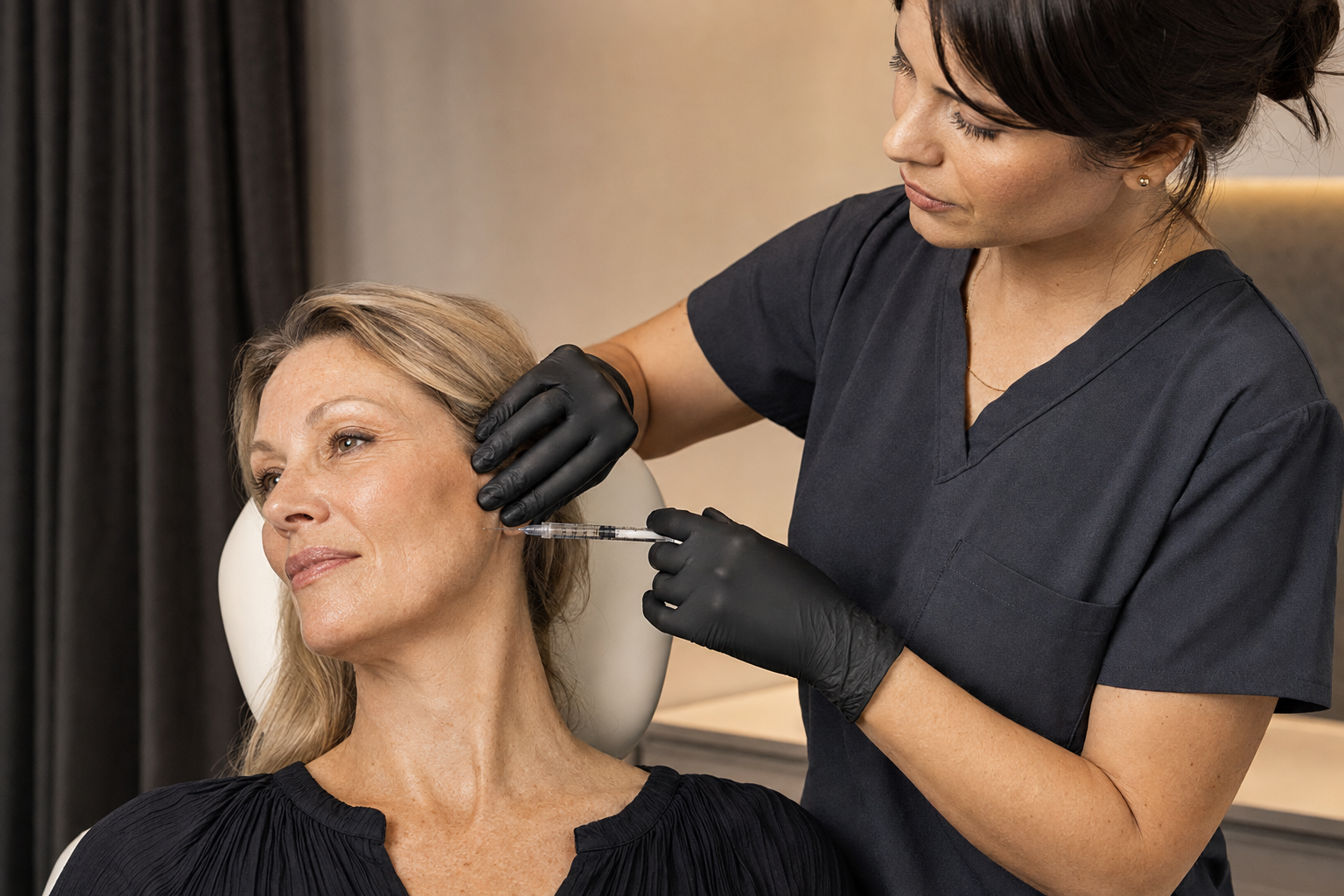
Skin boosters and collagen stimulators are both injectable treatments designed to improve the way skin ages, and there is some overlap between what they do. That can make choosing between them confusing.
The main difference is what we are asking the treatment to achieve.
Skin boosters such as Profhilo, Nucleofill and Rejuran are generally selected to improve skin quality, including hydration, elasticity, texture and repair. Many also support collagen production.
Collagen stimulators such as Sculptra place greater emphasis on stimulating new collagen to improve deeper structural support and age-related volume changes over time.
For some people, one approach is clearly more appropriate. For others, improving both skin quality and structural support can make sense as part of a longer-term treatment plan.
Skin boosters are injectable treatments designed to improve the condition and quality of the skin.
Unlike traditional dermal fillers, they aren't primarily used to sculpt a feature or create a particular facial shape. Instead, different formulations can work on concerns such as dehydration, reduced elasticity, fine lines, poor texture and skin that has become thinner or less resilient.
At Skin Studio, our skin booster range includes treatments such as Profhilo, Nucleofill and Rejuran. They don't all contain the same ingredients or work in exactly the same way, which is why “skin booster” is better understood as a treatment category than one specific product.
Profhilo uses a high concentration of hyaluronic acid to support hydration, firmness and collagen and elastin production. Nucleofill and Rejuran use polynucleotides to support repair, regeneration and collagen activity within the skin.
The common thread is that we're trying to improve the quality of the skin itself.
A collagen stimulator, sometimes called a collagen biostimulator, is an injectable treatment designed specifically to encourage the body to produce new collagen.
At Skin Studio, Sculptra is the clearest example.
Sculptra contains poly-L-lactic acid, or PLLA. Once injected into selected areas, it stimulates a biological response that encourages new collagen formation. As that collagen develops over the following weeks and months, it can gradually improve facial support and age-related volume loss.
This makes Sculptra particularly interesting when the changes we're seeing aren't limited to the surface quality of the skin. The face may have started to look less supported overall as collagen and volume have declined with age.
We've explained the treatment in more detail in our guide to what Sculptra is and how collagen stimulation works.
Yes, and this is where the terminology can become confusing.
Several skin boosters stimulate collagen or support the processes involved in collagen production. Profhilo is associated with collagen and elastin stimulation, while polynucleotide treatments such as Nucleofill and Rejuran support tissue regeneration and collagen activity.
So the distinction isn't that skin boosters hydrate while collagen stimulators make collagen. Skin biology is more complicated than that.
The difference is more about the treatment's primary role and the level of concern we're trying to address.
With a skin booster, we are generally concentrating on the condition of the skin: hydration, elasticity, texture, repair and resilience.
With Sculptra, collagen stimulation is central to creating greater structural support and restoring some of the broader volume that can be lost as the face ages.
Understanding that distinction is much more useful than trying to put every injectable into a completely separate box.
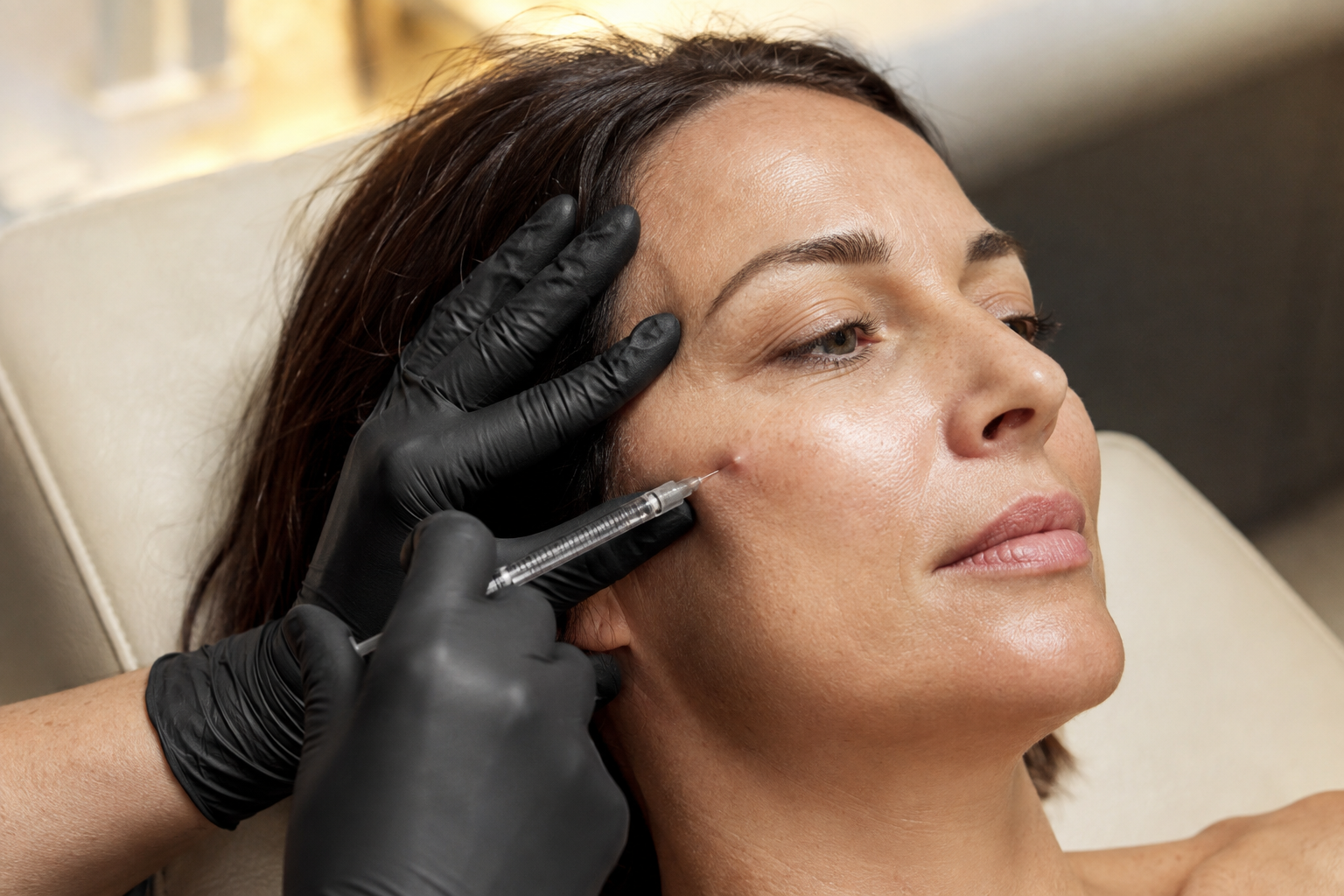
A skin booster may make more sense when the main concern is how the skin itself looks and behaves.
You might be noticing dehydration that skincare isn't adequately addressing, fine or crepey texture, reduced elasticity, early lines or skin that simply doesn't feel as strong and healthy as it used to.
Which skin booster we recommend then depends on the particular concern.
Profhilo can be particularly useful when hydration, elasticity and firmness are priorities.
Nucleofill uses polynucleotides to support hydration, tissue repair and regeneration and can be useful when skin quality and elasticity have declined.
Rejuran is another polynucleotide treatment with a strong focus on repair and regeneration, including improving damaged or post-acne skin and supporting overall texture.
We have a broader guide to collagen boosters for skin and how they work if you'd like to understand the different options in more detail.

A collagen stimulator such as Sculptra becomes particularly relevant when the concern is broader age-related loss of facial support and volume.
Rather than concentrating primarily on the surface condition of the skin, we're looking at how the face itself has changed as collagen, fat and structural support have declined.
You might notice that the cheeks or temples appear less supported, facial contours have changed or the face generally looks less full than it once did without being able to point to one particular wrinkle.
Sculptra can be used to stimulate new collagen in carefully selected areas, allowing that support to develop progressively.
This is also why Sculptra isn't necessarily the treatment we'd choose if someone's main complaint is simply dehydrated or crepey skin. The concern should determine the treatment, rather than starting with a product and looking for a reason to use it.
Yes. There can be a role for both because they can address different aspects of facial ageing.
Someone may have age-related changes in facial support that make Sculptra appropriate while also having dehydrated, thin or poor-quality skin that could benefit from a skin booster.
In that situation, the treatments don't need to compete with one another. They can form different parts of a wider treatment plan.
Timing matters, though. We wouldn't recommend simply booking several injectable treatments together because they all sound beneficial. Your doctor should decide which concern takes priority, which treatments work well together and how they should be spaced.
Dermal fillers add another useful option because they can restore or create volume directly in specific areas.
This means we have several different ways of approaching facial ageing.
A skin booster can improve skin quality. A collagen stimulator can encourage gradual structural support through new collagen. A dermal filler can provide more immediate and precisely placed volume or definition.
None is automatically more sophisticated or more natural than another. Good aesthetic medicine is about using the appropriate treatment for the change you're trying to address.
In some faces that means one treatment. In others, addressing different concerns with different tools creates the more balanced result.
Skin booster results vary according to the product. Improvements in hydration and skin quality can become noticeable relatively early, while regenerative and collagen-related changes continue to develop.
Sculptra is deliberately more progressive. New collagen takes time to form, so structural improvements build during the weeks and months following treatment.
That difference can matter when choosing a treatment. If you have an event next week and are looking for an immediate structural change, Sculptra isn't designed to produce its final result on that timetable.
If your goal is a longer-term improvement in facial support, allowing time for collagen to develop is part of the treatment rather than a drawback.
There isn't one useful longevity comparison across the whole category because skin boosters contain different ingredients and have different treatment protocols.
Profhilo, Nucleofill and Rejuran shouldn't be treated as interchangeable products simply because they all sit under the skin booster heading.
Sculptra results also depend on the treatment course and your individual collagen response.
Rather than choosing based purely on which treatment lasts longest, it makes more sense to first establish which treatment addresses the concern properly. A longer-lasting treatment isn't especially useful if it is solving the wrong problem.
A useful starting point is to think about what has actually changed.
If the issue is predominantly skin quality, such as hydration, elasticity, texture, fine lines or repair, a skin booster may be the more relevant option.
If you're seeing broader loss of facial support or age-related volume, a collagen stimulator such as Sculptra may make more sense.
If both are happening, there may be a role for both treatments at different stages of your plan.
The distinction isn't always something you can accurately make yourself in the mirror. Skin quality, fat distribution, collagen loss and changes in facial structure all contribute to how the face ages, and what looks like one concern may actually involve several.
Having a large treatment menu is only useful if we're selective about how we use it.
At Skin Studio, our aesthetic doctors assess your skin, facial anatomy and goals before recommending an injectable treatment. We can then decide whether the priority is improving skin quality, rebuilding structural support, restoring specific volume or addressing something else entirely.
That might mean Profhilo, Nucleofill or Rejuran. It might mean Sculptra. It might mean filler, HIFU, microneedling or a combination planned over time.
You don't need to arrive knowing which product you need. That's what the consultation is for.
Not sure whether your skin needs a skin booster, collagen stimulator or something else? Book a complimentary consultation with one of Skin Studio's aesthetic doctors for a personalised assessment and treatment recommendation.
Skin boosters generally focus on improving skin quality, including hydration, elasticity, texture and repair, although many also support collagen production. Collagen stimulators such as Sculptra place greater emphasis on stimulating new collagen to improve deeper facial support and age-related volume changes.
Many do. Profhilo supports collagen and elastin production, while polynucleotide treatments such as Nucleofill and Rejuran support tissue regeneration and collagen activity. The exact mechanism and benefits depend on the particular skin booster being used.
Sculptra is generally described as a collagen biostimulator rather than a skin booster. Its primary role is stimulating new collagen to gradually improve structural support and age-related facial volume loss.
Neither is universally better because they are designed for different concerns. Profhilo focuses strongly on hydration, elasticity and skin quality, while Sculptra stimulates collagen to improve deeper structural support and volume. Your facial anatomy and treatment goals determine which is more appropriate.
Yes, they can form different parts of the same treatment plan when both skin quality and structural support need attention. Your doctor should determine which treatment to prioritise and how appointments should be spaced.
No. Skin boosters are generally used to improve skin quality, while traditional dermal fillers are designed to add or restore volume in specific areas. Some products contain similar ingredients, such as hyaluronic acid, but their formulation, placement and treatment objectives differ.
Start with the concern rather than the product. A professional facial and skin assessment can determine whether the priority is hydration and skin quality, collagen and structural support, direct volume restoration or another issue entirely.
Skin boosters and collagen stimulators are both injectable treatments designed to improve the way skin ages, and there is some overlap between what they do. That can make choosing between them confusing.
The main difference is what we are asking the treatment to achieve.
Skin boosters such as Profhilo, Nucleofill and Rejuran are generally selected to improve skin quality, including hydration, elasticity, texture and repair. Many also support collagen production.
Collagen stimulators such as Sculptra place greater emphasis on stimulating new collagen to improve deeper structural support and age-related volume changes over time.
For some people, one approach is clearly more appropriate. For others, improving both skin quality and structural support can make sense as part of a longer-term treatment plan.
Skin boosters are injectable treatments designed to improve the condition and quality of the skin.
Unlike traditional dermal fillers, they aren't primarily used to sculpt a feature or create a particular facial shape. Instead, different formulations can work on concerns such as dehydration, reduced elasticity, fine lines, poor texture and skin that has become thinner or less resilient.
At Skin Studio, our skin booster range includes treatments such as Profhilo, Nucleofill and Rejuran. They don't all contain the same ingredients or work in exactly the same way, which is why “skin booster” is better understood as a treatment category than one specific product.
Profhilo uses a high concentration of hyaluronic acid to support hydration, firmness and collagen and elastin production. Nucleofill and Rejuran use polynucleotides to support repair, regeneration and collagen activity within the skin.
The common thread is that we're trying to improve the quality of the skin itself.
A collagen stimulator, sometimes called a collagen biostimulator, is an injectable treatment designed specifically to encourage the body to produce new collagen.
At Skin Studio, Sculptra is the clearest example.
Sculptra contains poly-L-lactic acid, or PLLA. Once injected into selected areas, it stimulates a biological response that encourages new collagen formation. As that collagen develops over the following weeks and months, it can gradually improve facial support and age-related volume loss.
This makes Sculptra particularly interesting when the changes we're seeing aren't limited to the surface quality of the skin. The face may have started to look less supported overall as collagen and volume have declined with age.
We've explained the treatment in more detail in our guide to what Sculptra is and how collagen stimulation works.
Yes, and this is where the terminology can become confusing.
Several skin boosters stimulate collagen or support the processes involved in collagen production. Profhilo is associated with collagen and elastin stimulation, while polynucleotide treatments such as Nucleofill and Rejuran support tissue regeneration and collagen activity.
So the distinction isn't that skin boosters hydrate while collagen stimulators make collagen. Skin biology is more complicated than that.
The difference is more about the treatment's primary role and the level of concern we're trying to address.
With a skin booster, we are generally concentrating on the condition of the skin: hydration, elasticity, texture, repair and resilience.
With Sculptra, collagen stimulation is central to creating greater structural support and restoring some of the broader volume that can be lost as the face ages.
Understanding that distinction is much more useful than trying to put every injectable into a completely separate box.
A skin booster may make more sense when the main concern is how the skin itself looks and behaves.
You might be noticing dehydration that skincare isn't adequately addressing, fine or crepey texture, reduced elasticity, early lines or skin that simply doesn't feel as strong and healthy as it used to.
Which skin booster we recommend then depends on the particular concern.
Profhilo can be particularly useful when hydration, elasticity and firmness are priorities.
Nucleofill uses polynucleotides to support hydration, tissue repair and regeneration and can be useful when skin quality and elasticity have declined.
Rejuran is another polynucleotide treatment with a strong focus on repair and regeneration, including improving damaged or post-acne skin and supporting overall texture.
We have a broader guide to collagen boosters for skin and how they work if you'd like to understand the different options in more detail.
A collagen stimulator such as Sculptra becomes particularly relevant when the concern is broader age-related loss of facial support and volume.
Rather than concentrating primarily on the surface condition of the skin, we're looking at how the face itself has changed as collagen, fat and structural support have declined.
You might notice that the cheeks or temples appear less supported, facial contours have changed or the face generally looks less full than it once did without being able to point to one particular wrinkle.
Sculptra can be used to stimulate new collagen in carefully selected areas, allowing that support to develop progressively.
This is also why Sculptra isn't necessarily the treatment we'd choose if someone's main complaint is simply dehydrated or crepey skin. The concern should determine the treatment, rather than starting with a product and looking for a reason to use it.
Yes. There can be a role for both because they can address different aspects of facial ageing.
Someone may have age-related changes in facial support that make Sculptra appropriate while also having dehydrated, thin or poor-quality skin that could benefit from a skin booster.
In that situation, the treatments don't need to compete with one another. They can form different parts of a wider treatment plan.
Timing matters, though. We wouldn't recommend simply booking several injectable treatments together because they all sound beneficial. Your doctor should decide which concern takes priority, which treatments work well together and how they should be spaced.
Dermal fillers add another useful option because they can restore or create volume directly in specific areas.
This means we have several different ways of approaching facial ageing.
A skin booster can improve skin quality. A collagen stimulator can encourage gradual structural support through new collagen. A dermal filler can provide more immediate and precisely placed volume or definition.
None is automatically more sophisticated or more natural than another. Good aesthetic medicine is about using the appropriate treatment for the change you're trying to address.
In some faces that means one treatment. In others, addressing different concerns with different tools creates the more balanced result.
Skin booster results vary according to the product. Improvements in hydration and skin quality can become noticeable relatively early, while regenerative and collagen-related changes continue to develop.
Sculptra is deliberately more progressive. New collagen takes time to form, so structural improvements build during the weeks and months following treatment.
That difference can matter when choosing a treatment. If you have an event next week and are looking for an immediate structural change, Sculptra isn't designed to produce its final result on that timetable.
If your goal is a longer-term improvement in facial support, allowing time for collagen to develop is part of the treatment rather than a drawback.
There isn't one useful longevity comparison across the whole category because skin boosters contain different ingredients and have different treatment protocols.
Profhilo, Nucleofill and Rejuran shouldn't be treated as interchangeable products simply because they all sit under the skin booster heading.
Sculptra results also depend on the treatment course and your individual collagen response.
Rather than choosing based purely on which treatment lasts longest, it makes more sense to first establish which treatment addresses the concern properly. A longer-lasting treatment isn't especially useful if it is solving the wrong problem.
A useful starting point is to think about what has actually changed.
If the issue is predominantly skin quality, such as hydration, elasticity, texture, fine lines or repair, a skin booster may be the more relevant option.
If you're seeing broader loss of facial support or age-related volume, a collagen stimulator such as Sculptra may make more sense.
If both are happening, there may be a role for both treatments at different stages of your plan.
The distinction isn't always something you can accurately make yourself in the mirror. Skin quality, fat distribution, collagen loss and changes in facial structure all contribute to how the face ages, and what looks like one concern may actually involve several.
Having a large treatment menu is only useful if we're selective about how we use it.
At Skin Studio, our aesthetic doctors assess your skin, facial anatomy and goals before recommending an injectable treatment. We can then decide whether the priority is improving skin quality, rebuilding structural support, restoring specific volume or addressing something else entirely.
That might mean Profhilo, Nucleofill or Rejuran. It might mean Sculptra. It might mean filler, HIFU, microneedling or a combination planned over time.
You don't need to arrive knowing which product you need. That's what the consultation is for.
Not sure whether your skin needs a skin booster, collagen stimulator or something else? Book a complimentary consultation with one of Skin Studio's aesthetic doctors for a personalised assessment and treatment recommendation.
Skin boosters generally focus on improving skin quality, including hydration, elasticity, texture and repair, although many also support collagen production. Collagen stimulators such as Sculptra place greater emphasis on stimulating new collagen to improve deeper facial support and age-related volume changes.
Many do. Profhilo supports collagen and elastin production, while polynucleotide treatments such as Nucleofill and Rejuran support tissue regeneration and collagen activity. The exact mechanism and benefits depend on the particular skin booster being used.
Sculptra is generally described as a collagen biostimulator rather than a skin booster. Its primary role is stimulating new collagen to gradually improve structural support and age-related facial volume loss.
Neither is universally better because they are designed for different concerns. Profhilo focuses strongly on hydration, elasticity and skin quality, while Sculptra stimulates collagen to improve deeper structural support and volume. Your facial anatomy and treatment goals determine which is more appropriate.
Yes, they can form different parts of the same treatment plan when both skin quality and structural support need attention. Your doctor should determine which treatment to prioritise and how appointments should be spaced.
No. Skin boosters are generally used to improve skin quality, while traditional dermal fillers are designed to add or restore volume in specific areas. Some products contain similar ingredients, such as hyaluronic acid, but their formulation, placement and treatment objectives differ.
Start with the concern rather than the product. A professional facial and skin assessment can determine whether the priority is hydration and skin quality, collagen and structural support, direct volume restoration or another issue entirely.

Not sure which treatment is right for you? Book a complimentary consultation and we'll assess your skin, talk through your concerns and recommend what makes sense for you.
Book A Complimentary Skin Consultation
Skin Studio is a doctor-led aesthetics and dermatology clinic in Bali. Our approach is personal, precise and grounded in honest medical advice.
Talk through your concerns and receive clear recommendations, with no pressure to proceed.
Book Your Free ConsultationDiscover Skin Studio →.png)
Discover the perfect balance of how aesthetic treatments can enhance skin health and beauty at Skin Studio Aesthetics. Your beauty journey begins here.


