Unlock 10% Off Your First Visit!
.svg)

These HIFU before-and-after photographs show the results eight weeks after one Ultraformer MPT treatment at Skin Studio Bali.
The improvement is particularly visible through the lower face, jawline and neck. The jawline has more definition, the area beneath the chin appears firmer and there is better support through the lower face. Importantly, she still looks entirely like herself.
This is a good example of what we want from HIFU. The treatment stimulates collagen within targeted tissue, so the face gradually becomes firmer and better supported without changing the client's features.
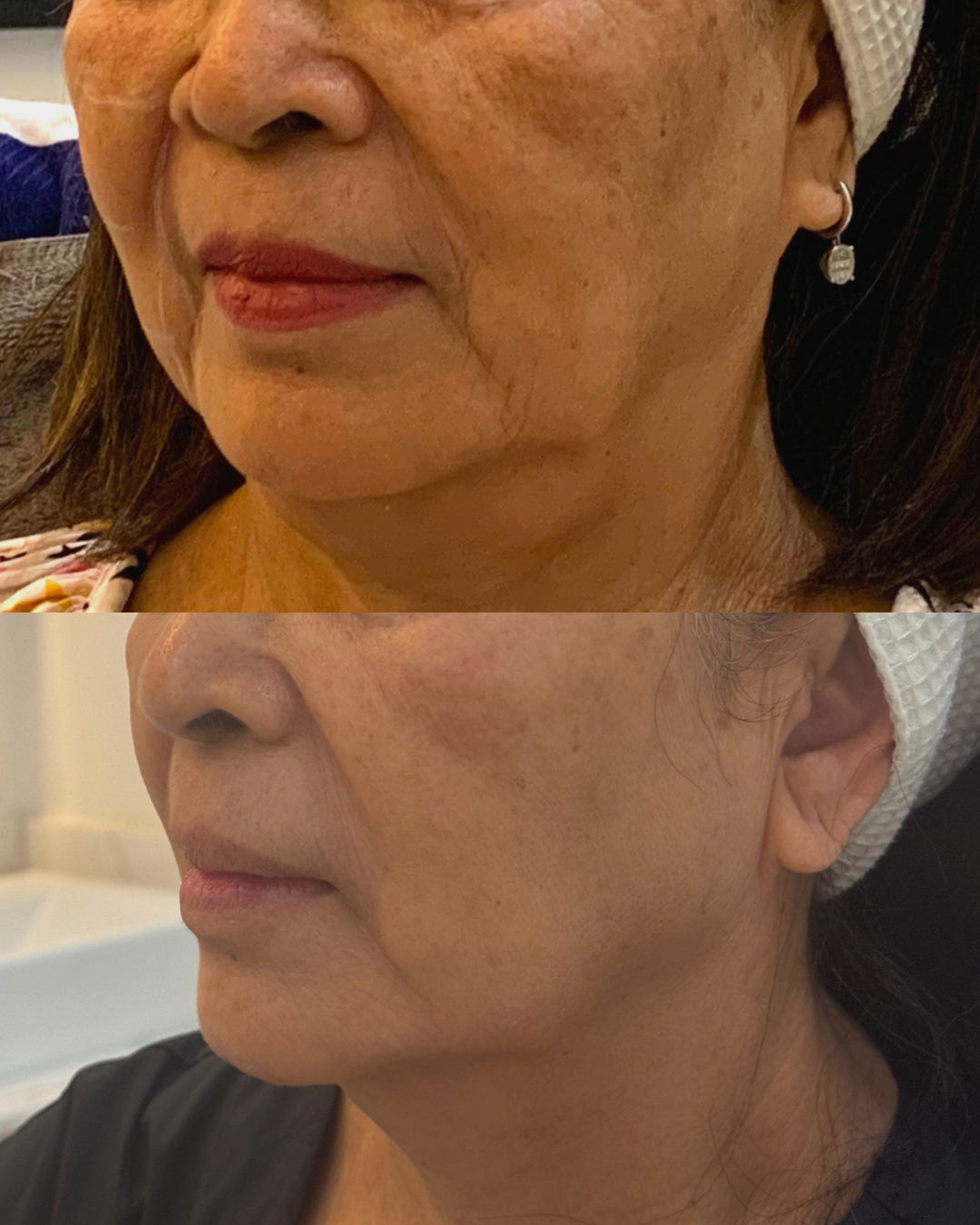
This client had one personalised Ultraformer MPT treatment across the face and neck. These photographs were taken eight weeks later.
Look closely at the lower third of the face and you can see where the change has happened. The line of the jaw is more distinct, there is less heaviness through the lower face and the transition from the chin into the neck appears firmer and more defined.
It isn't a different face, and that is exactly the point. This is her own facial structure with better support.
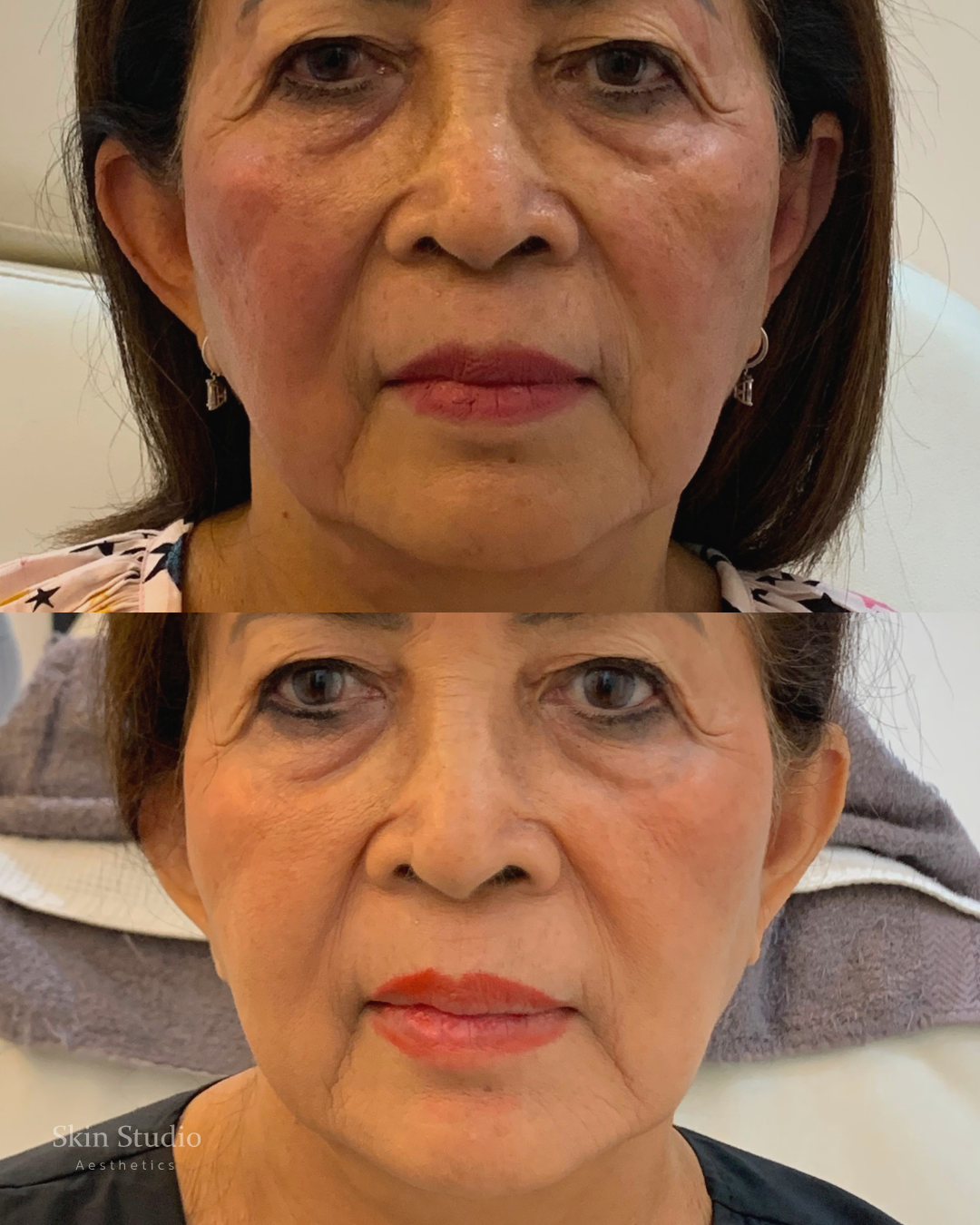
There are several changes visible in the photographs rather than one dramatic difference.
The line running from the chin towards the ear is clearer and better defined. This gives the lower face a more structured appearance without adding volume or altering the shape of the jaw.
There is visible improvement through the lower cheek and early jowl area. The lower face appears lighter and better supported, which contributes to the overall lifting effect.
The under-chin area looks firmer, creating a clearer separation between the jawline and neck.
The neck also appears smoother and better supported. When viewed together with the changes beneath the chin and along the jaw, this creates a more defined transition from the face into the neck.
Ultraformer MPT uses focused ultrasound energy at selected tissue depths to stimulate collagen renewal and remodelling.
Collagen takes time to rebuild, which is why HIFU results develop progressively rather than appearing fully immediately after the appointment. This client was photographed at eight weeks, when that collagen response was already creating a visible change, and improvement can continue developing beyond this point.
If you'd like the full explanation of the technology, read our guide to how HIFU stimulates collagen and tightens the skin.
Yes. A single, well-planned HIFU session can create visible improvement in a suitable client, as this eight-week result demonstrates.
How much change you see depends on your starting skin quality, degree of laxity, facial anatomy, natural collagen response and the way the treatment is planned. Cartridge depth, treatment mapping and energy delivery all need to be selected for the individual rather than applied as a standard protocol.
Some clients may benefit from additional or future maintenance treatment, but more sessions are not automatically necessary simply because more treatment is available. We prefer to treat appropriately, allow the collagen response to develop and then assess the result.
You may notice an early feeling of firmness after treatment, but the more meaningful HIFU results develop as collagen begins to renew.
During the first four to eight weeks, changes in firmness and definition can become easier to see. This is where the client featured here is in her treatment journey.
By around two to three months, collagen remodelling is more established and the lifting and tightening effect may become more apparent. Some clients continue to see gradual changes beyond this as the tissue continues to remodel.
This gradual development is one of the reasons HIFU results tend to look natural. Your face isn't suddenly changed overnight. The support within the treated tissue improves progressively.
Yes. The lower face, jawline and early jowls are among the areas we commonly assess for HIFU because focused ultrasound can be used at different tissue depths to support facial firmness and definition.
This client's result is a particularly good example. At eight weeks, the jawline is visibly more defined and there is less heaviness through the early jowl area.
HIFU tends to be best suited to mild to moderate skin laxity. If there is significant loose skin or more advanced facial ageing, another approach may achieve a better result. We've explained this properly in HIFU compared with a surgical facelift.
Yes. Ultraformer MPT can be mapped across selected areas beneath the chin and through the neck to stimulate collagen and improve firmness.
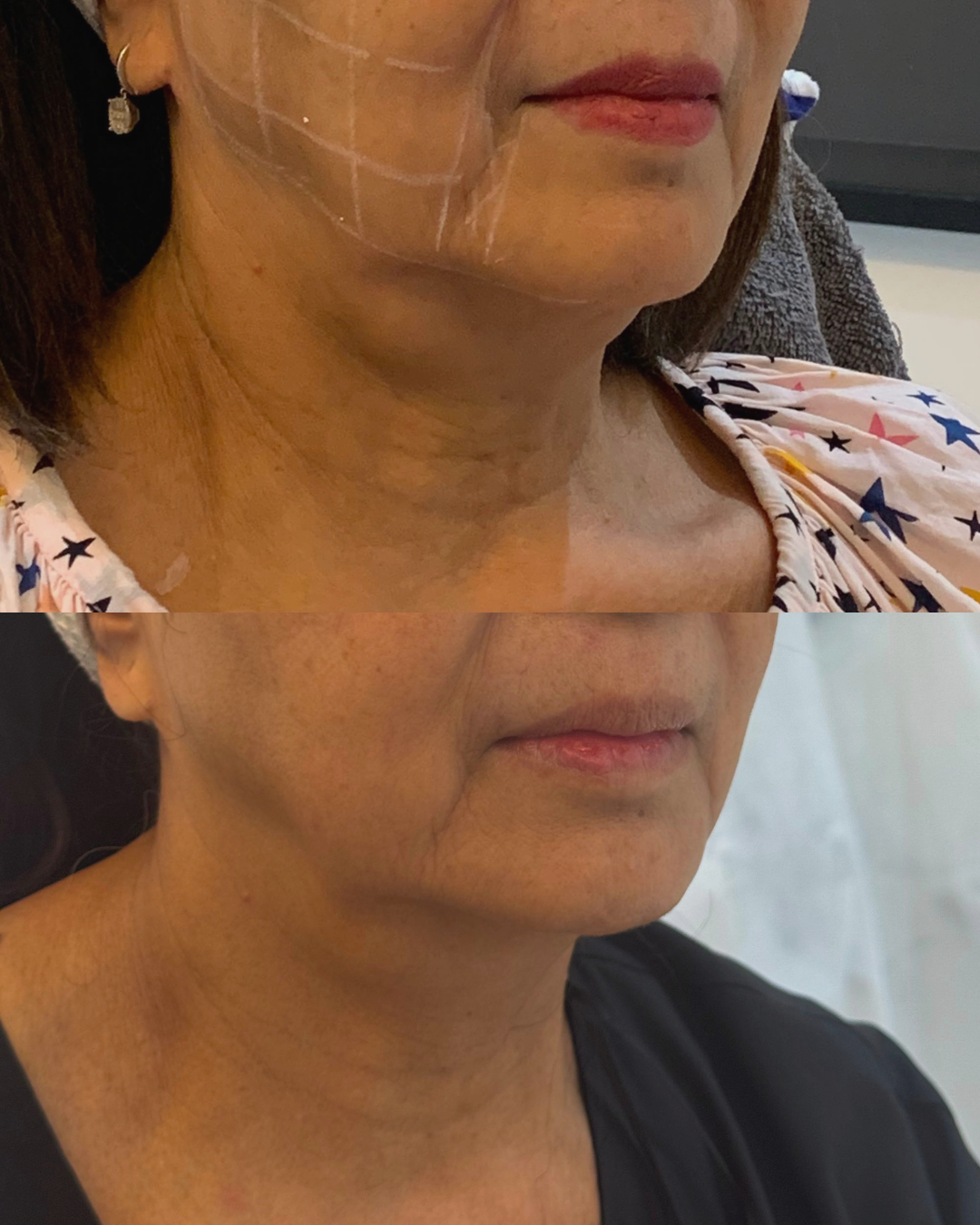
In this client's side view, you can see improved definition beneath the chin and a smoother transition into the neck eight weeks after treatment.
The important part is understanding what is creating the concern. Skin laxity, localised fat and facial anatomy can all affect how this area looks, so our doctors assess the tissue before deciding where and how to treat.
HIFU works within your existing facial structure. It stimulates collagen and improves tissue support, so the result develops from changes within your own skin rather than from adding volume.
For this client, that means better definition through the jawline, improved firmness and a more supported lower face while her expressions, proportions and identity remain completely her own.
This is very much how we approach aesthetic treatment at Skin Studio. We want people to notice that you look good, rather than immediately identify what you've had done.
At Skin Studio, we perform HIFU using Ultraformer MPT. The system offers multiple cartridge depths and different modes of energy delivery, allowing our doctors to plan treatment according to the anatomy and tissue being treated.
That matters because there isn't one standard HIFU treatment for every face. Different areas may require different depths, and the treatment plan should reflect where support is needed rather than simply delivering the same number of lines everywhere.
If you're comparing HIFU devices or clinics, our guide to what makes Ultraformer MPT different explains the technology and why the treatment plan matters just as much as the machine.
For technical information about the system itself, you can also view the official Ultraformer MPT information from CLASSYS.
No two faces or treatment responses are identical, so we wouldn't expect everyone to reproduce this client's result exactly.
What this case does show is what one carefully planned Ultraformer MPT session can achieve in an appropriate candidate.
HIFU is often particularly useful when we're seeing early jowling, reduced jawline definition, mild to moderate skin laxity, loose skin beneath the chin or reduced neck firmness. Your natural collagen response and starting skin quality also influence the degree of improvement.
This is why we assess your face before recommending treatment. The question isn't simply whether HIFU works. It's whether HIFU is likely to work well for your particular concern.
HIFU results can remain visible for many months as the newly remodelled collagen continues to support the tissue, although longevity varies between clients.
Natural ageing continues, so the skin and underlying tissues will keep changing over time. Your age, skin quality, lifestyle and future changes in weight can all influence how long the result remains visible.
Some clients choose periodic maintenance treatment once the initial result has developed. Your doctor can recommend whether and when this makes sense for you based on how your skin responds.
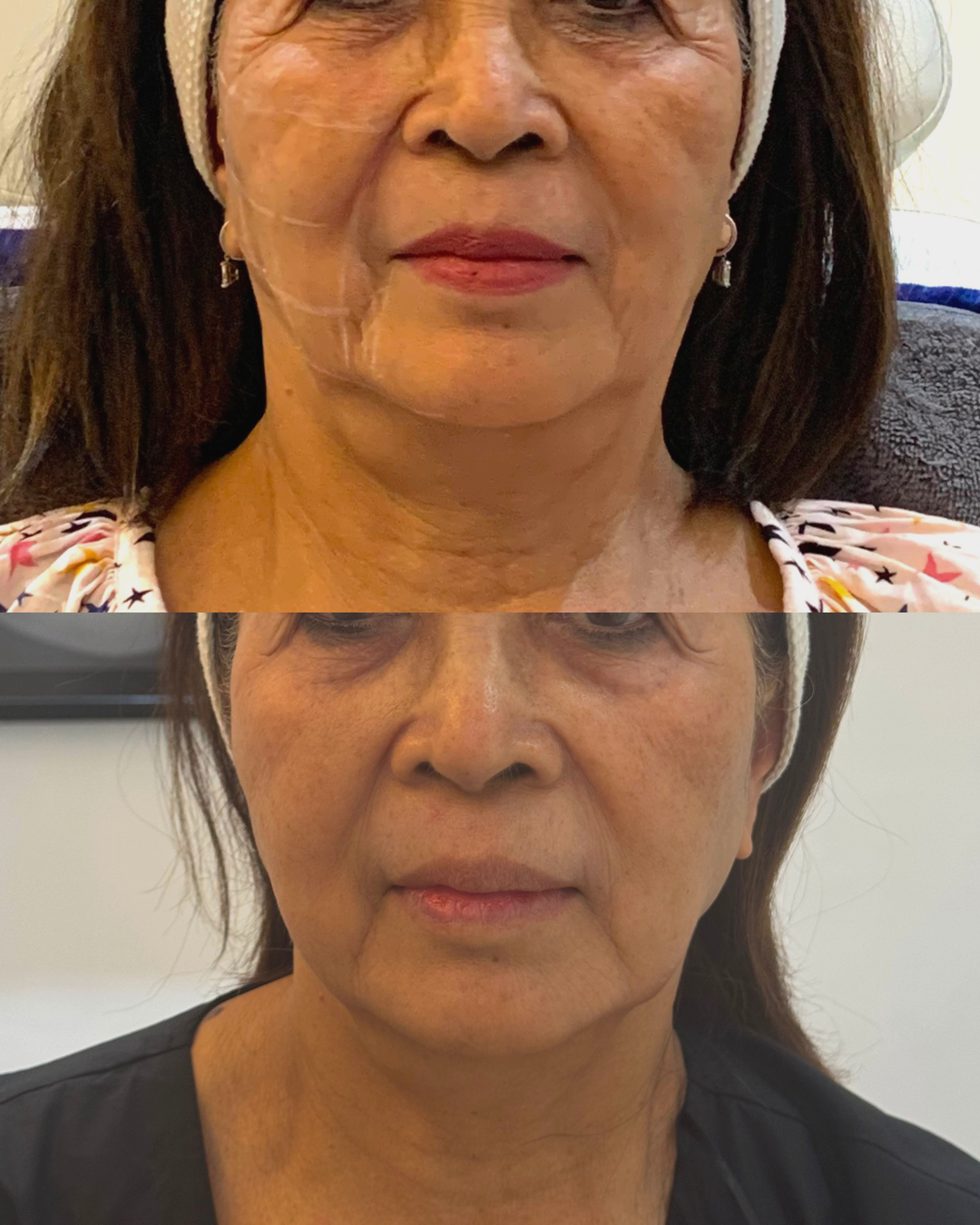
Eight weeks after one Ultraformer MPT session, this client has a more defined jawline, improved support through the lower face and better firmness beneath the chin and through the neck.
The changes are visible without changing the character of her face. For us, that's a strong HIFU result.
If you're considering HIFU, the useful question isn't whether you can reproduce somebody else's before-and-after photograph. It's what Ultraformer MPT could realistically achieve with your skin, anatomy and degree of laxity.
Would you like to know what HIFU could achieve for your face or neck? Book a complimentary consultation with one of Skin Studio's doctors for a personalised assessment and treatment recommendation.
Some people notice early firmness after treatment, but visible lifting and tightening generally develop over the following weeks as collagen renews. The client featured in this article already shows clear improvement eight weeks after her treatment.
Yes. This client's before-and-after photographs demonstrate visible improvement after one Ultraformer MPT session. Whether one treatment is sufficient for you depends on your skin quality, degree of laxity, anatomy and individual collagen response.
Collagen remodelling continues after treatment, so results typically become more established over two to three months and may continue developing beyond this point. Your doctor can assess your individual response before recommending any additional treatment.
HIFU can improve jawline definition in suitable clients by stimulating collagen and improving support through the lower face. The featured client's eight-week result shows a clearer, more defined line from the chin towards the ear.
HIFU can improve early jowling where mild to moderate skin laxity is contributing to heaviness through the lower face. More advanced laxity may require a different treatment approach.
HIFU can be used across selected areas of the neck to stimulate collagen and improve mild to moderate laxity. This client's side-view result shows improved firmness and definition through the neck eight weeks after treatment.
There is no universal schedule. Some clients achieve a worthwhile result from one treatment and later choose periodic maintenance. Treatment frequency should be based on your starting point, response and ongoing skin changes.
Ultraformer MPT stimulates collagen within the treated tissue rather than changing the proportions of the face. This allows improvements in firmness and definition to develop gradually within the client's existing facial structure.
They address different levels of skin laxity. HIFU can be an effective non-surgical option for mild to moderate laxity, while a facelift can achieve greater structural change when ageing is more advanced. Read our full guide to HIFU versus facelift treatment for a more detailed comparison.
These HIFU before-and-after photographs show the results eight weeks after one Ultraformer MPT treatment at Skin Studio Bali.
The improvement is particularly visible through the lower face, jawline and neck. The jawline has more definition, the area beneath the chin appears firmer and there is better support through the lower face. Importantly, she still looks entirely like herself.
This is a good example of what we want from HIFU. The treatment stimulates collagen within targeted tissue, so the face gradually becomes firmer and better supported without changing the client's features.
This client had one personalised Ultraformer MPT treatment across the face and neck. These photographs were taken eight weeks later.
Look closely at the lower third of the face and you can see where the change has happened. The line of the jaw is more distinct, there is less heaviness through the lower face and the transition from the chin into the neck appears firmer and more defined.
It isn't a different face, and that is exactly the point. This is her own facial structure with better support.
There are several changes visible in the photographs rather than one dramatic difference.
The line running from the chin towards the ear is clearer and better defined. This gives the lower face a more structured appearance without adding volume or altering the shape of the jaw.
There is visible improvement through the lower cheek and early jowl area. The lower face appears lighter and better supported, which contributes to the overall lifting effect.
The under-chin area looks firmer, creating a clearer separation between the jawline and neck.
The neck also appears smoother and better supported. When viewed together with the changes beneath the chin and along the jaw, this creates a more defined transition from the face into the neck.
Ultraformer MPT uses focused ultrasound energy at selected tissue depths to stimulate collagen renewal and remodelling.
Collagen takes time to rebuild, which is why HIFU results develop progressively rather than appearing fully immediately after the appointment. This client was photographed at eight weeks, when that collagen response was already creating a visible change, and improvement can continue developing beyond this point.
If you'd like the full explanation of the technology, read our guide to how HIFU stimulates collagen and tightens the skin.
Yes. A single, well-planned HIFU session can create visible improvement in a suitable client, as this eight-week result demonstrates.
How much change you see depends on your starting skin quality, degree of laxity, facial anatomy, natural collagen response and the way the treatment is planned. Cartridge depth, treatment mapping and energy delivery all need to be selected for the individual rather than applied as a standard protocol.
Some clients may benefit from additional or future maintenance treatment, but more sessions are not automatically necessary simply because more treatment is available. We prefer to treat appropriately, allow the collagen response to develop and then assess the result.
You may notice an early feeling of firmness after treatment, but the more meaningful HIFU results develop as collagen begins to renew.
During the first four to eight weeks, changes in firmness and definition can become easier to see. This is where the client featured here is in her treatment journey.
By around two to three months, collagen remodelling is more established and the lifting and tightening effect may become more apparent. Some clients continue to see gradual changes beyond this as the tissue continues to remodel.
This gradual development is one of the reasons HIFU results tend to look natural. Your face isn't suddenly changed overnight. The support within the treated tissue improves progressively.
Yes. The lower face, jawline and early jowls are among the areas we commonly assess for HIFU because focused ultrasound can be used at different tissue depths to support facial firmness and definition.
This client's result is a particularly good example. At eight weeks, the jawline is visibly more defined and there is less heaviness through the early jowl area.
HIFU tends to be best suited to mild to moderate skin laxity. If there is significant loose skin or more advanced facial ageing, another approach may achieve a better result. We've explained this properly in HIFU compared with a surgical facelift.
Yes. Ultraformer MPT can be mapped across selected areas beneath the chin and through the neck to stimulate collagen and improve firmness.
In this client's side view, you can see improved definition beneath the chin and a smoother transition into the neck eight weeks after treatment.
The important part is understanding what is creating the concern. Skin laxity, localised fat and facial anatomy can all affect how this area looks, so our doctors assess the tissue before deciding where and how to treat.
HIFU works within your existing facial structure. It stimulates collagen and improves tissue support, so the result develops from changes within your own skin rather than from adding volume.
For this client, that means better definition through the jawline, improved firmness and a more supported lower face while her expressions, proportions and identity remain completely her own.
This is very much how we approach aesthetic treatment at Skin Studio. We want people to notice that you look good, rather than immediately identify what you've had done.
At Skin Studio, we perform HIFU using Ultraformer MPT. The system offers multiple cartridge depths and different modes of energy delivery, allowing our doctors to plan treatment according to the anatomy and tissue being treated.
That matters because there isn't one standard HIFU treatment for every face. Different areas may require different depths, and the treatment plan should reflect where support is needed rather than simply delivering the same number of lines everywhere.
If you're comparing HIFU devices or clinics, our guide to what makes Ultraformer MPT different explains the technology and why the treatment plan matters just as much as the machine.
For technical information about the system itself, you can also view the official Ultraformer MPT information from CLASSYS.
No two faces or treatment responses are identical, so we wouldn't expect everyone to reproduce this client's result exactly.
What this case does show is what one carefully planned Ultraformer MPT session can achieve in an appropriate candidate.
HIFU is often particularly useful when we're seeing early jowling, reduced jawline definition, mild to moderate skin laxity, loose skin beneath the chin or reduced neck firmness. Your natural collagen response and starting skin quality also influence the degree of improvement.
This is why we assess your face before recommending treatment. The question isn't simply whether HIFU works. It's whether HIFU is likely to work well for your particular concern.
HIFU results can remain visible for many months as the newly remodelled collagen continues to support the tissue, although longevity varies between clients.
Natural ageing continues, so the skin and underlying tissues will keep changing over time. Your age, skin quality, lifestyle and future changes in weight can all influence how long the result remains visible.
Some clients choose periodic maintenance treatment once the initial result has developed. Your doctor can recommend whether and when this makes sense for you based on how your skin responds.
Eight weeks after one Ultraformer MPT session, this client has a more defined jawline, improved support through the lower face and better firmness beneath the chin and through the neck.
The changes are visible without changing the character of her face. For us, that's a strong HIFU result.
If you're considering HIFU, the useful question isn't whether you can reproduce somebody else's before-and-after photograph. It's what Ultraformer MPT could realistically achieve with your skin, anatomy and degree of laxity.
Would you like to know what HIFU could achieve for your face or neck? Book a complimentary consultation with one of Skin Studio's doctors for a personalised assessment and treatment recommendation.
Some people notice early firmness after treatment, but visible lifting and tightening generally develop over the following weeks as collagen renews. The client featured in this article already shows clear improvement eight weeks after her treatment.
Yes. This client's before-and-after photographs demonstrate visible improvement after one Ultraformer MPT session. Whether one treatment is sufficient for you depends on your skin quality, degree of laxity, anatomy and individual collagen response.
Collagen remodelling continues after treatment, so results typically become more established over two to three months and may continue developing beyond this point. Your doctor can assess your individual response before recommending any additional treatment.
HIFU can improve jawline definition in suitable clients by stimulating collagen and improving support through the lower face. The featured client's eight-week result shows a clearer, more defined line from the chin towards the ear.
HIFU can improve early jowling where mild to moderate skin laxity is contributing to heaviness through the lower face. More advanced laxity may require a different treatment approach.
HIFU can be used across selected areas of the neck to stimulate collagen and improve mild to moderate laxity. This client's side-view result shows improved firmness and definition through the neck eight weeks after treatment.
There is no universal schedule. Some clients achieve a worthwhile result from one treatment and later choose periodic maintenance. Treatment frequency should be based on your starting point, response and ongoing skin changes.
Ultraformer MPT stimulates collagen within the treated tissue rather than changing the proportions of the face. This allows improvements in firmness and definition to develop gradually within the client's existing facial structure.
They address different levels of skin laxity. HIFU can be an effective non-surgical option for mild to moderate laxity, while a facelift can achieve greater structural change when ageing is more advanced. Read our full guide to HIFU versus facelift treatment for a more detailed comparison.
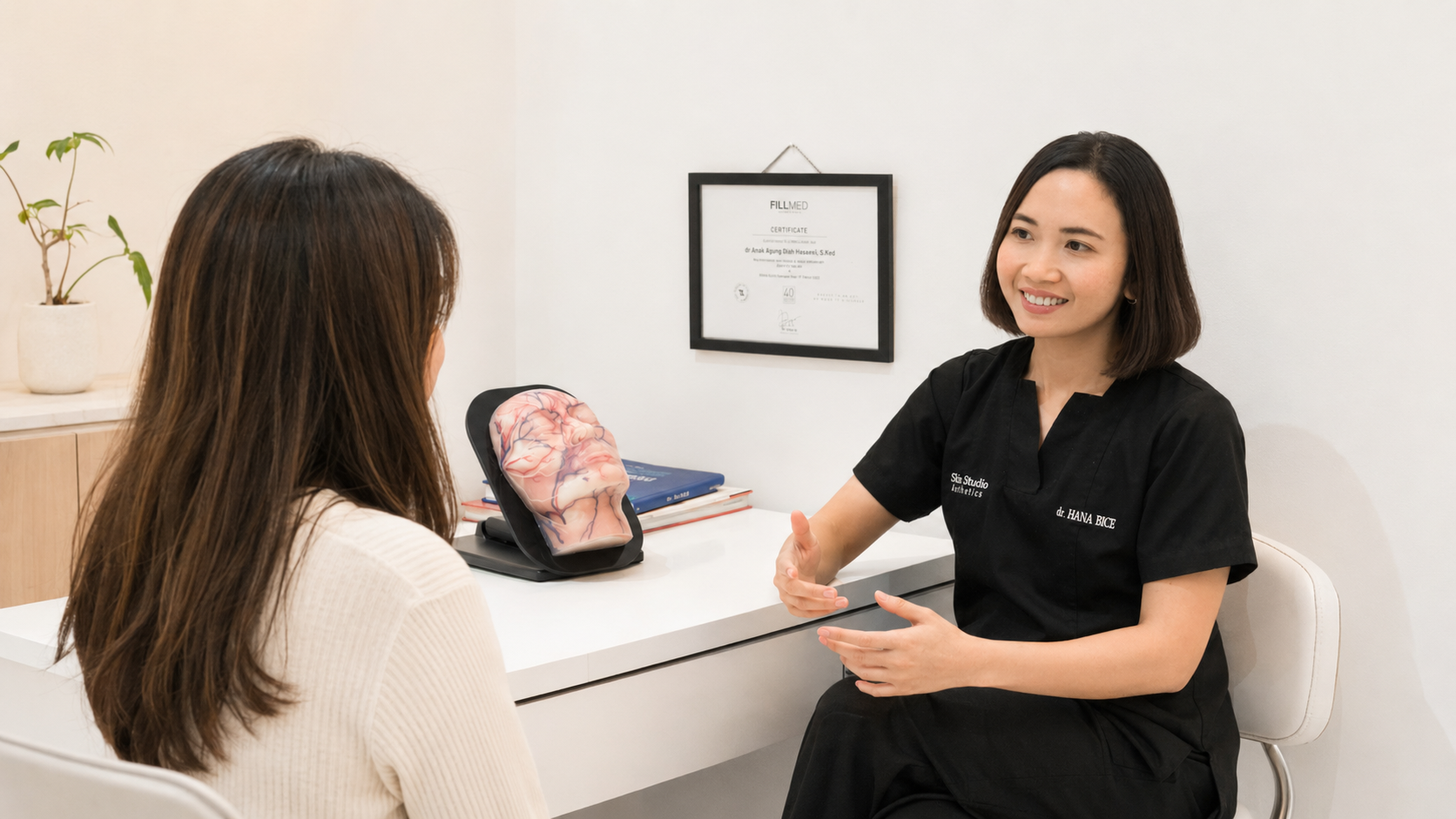
Not sure which treatment is right for you? Book a complimentary consultation and we'll assess your skin, talk through your concerns and recommend what makes sense for you.
Book A Complimentary Skin Consultation
Skin Studio is a doctor-led aesthetics and dermatology clinic in Bali. Our approach is personal, precise and grounded in honest medical advice.
Talk through your concerns and receive clear recommendations, with no pressure to proceed.
Book Your Free ConsultationDiscover Skin Studio →.png)
Discover the perfect balance of how aesthetic treatments can enhance skin health and beauty at Skin Studio Aesthetics. Your beauty journey begins here.


